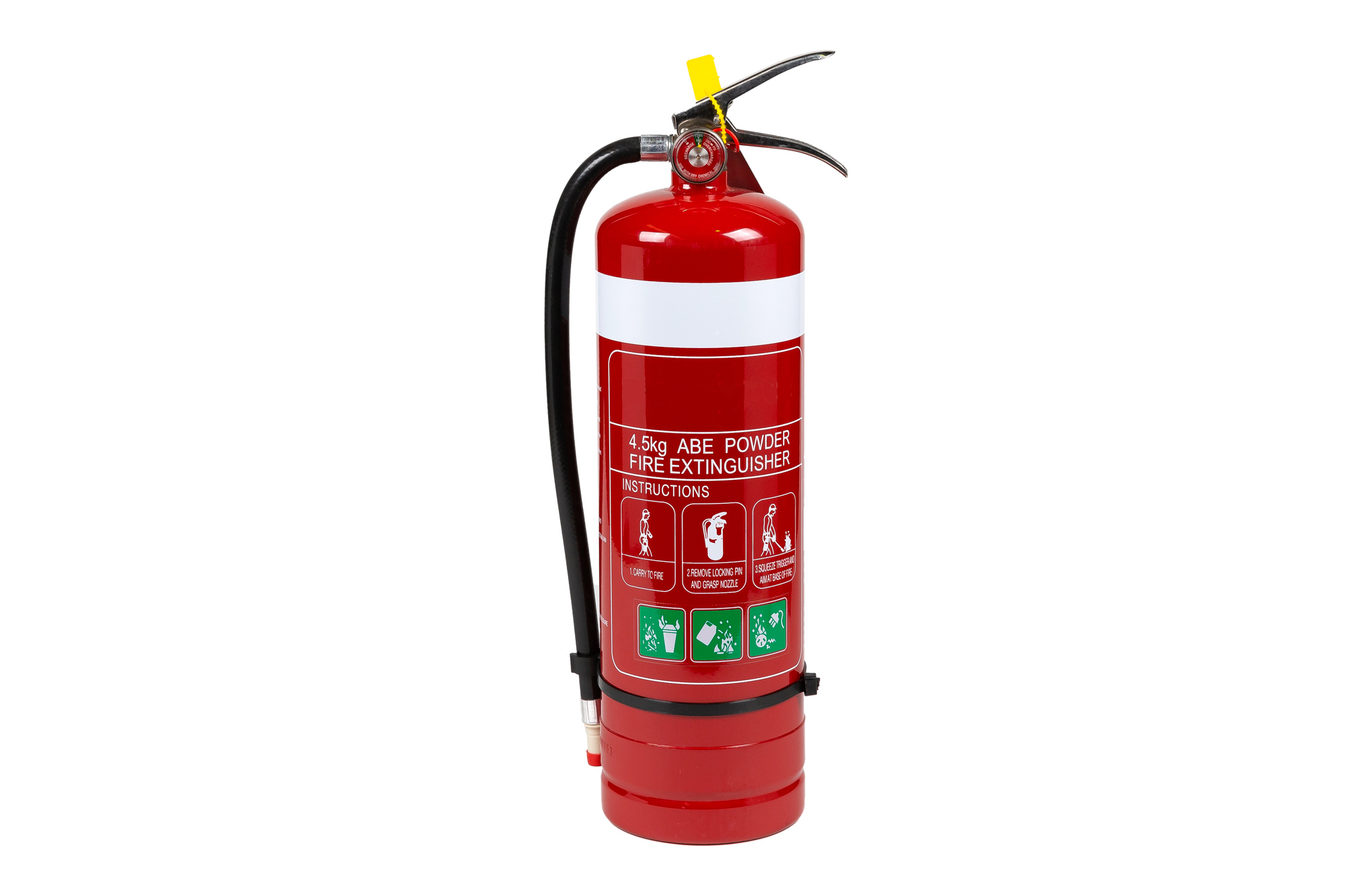
| The classes of fire |
| There are six classes of fire: Class A, Class B, Class C, Class D, Class E, and Class F. |
| * Class A fires – combustible materials: caused by flammable solids, such as wood, paper, and fabric |
| * Class B fires – flammable liquids: such as petrol, turpentine or paint |
| * Class C fires – flammable gases: like LPG, hydrogen, butane or methane |
| * Class D fires – combustible metals: chemicals such as magnesium, aluminum or potassium |
| * Class E fires – electrical equipment: once the electrical item is removed, the fire changes class |
| * Class F fires – cooking oils: typically a chip-pan fire |
| |
| An easy way to determine which fire extinguisher to use is by the different coloured bands on the top of each cylinder. |
| This coloured band tells us what type of fire extinguisher it is therefore allowing us to recognise which fire to use it for. |